Disclosure: As an Amazon Associate, AirDaddy earns from qualifying purchases. This helps support our site at no extra cost to you.
Why This Guide Is Different (Tested for Real UK Homes)
- We test in real UK rooms — bedrooms, flats, open-plan spaces — not labs
- Every recommendation is matched to room size, dust levels, and budget
- We only recommend products we'd use in our own homes
- Prices, availability, and picks updated monthly for the UK market
Quick Picks
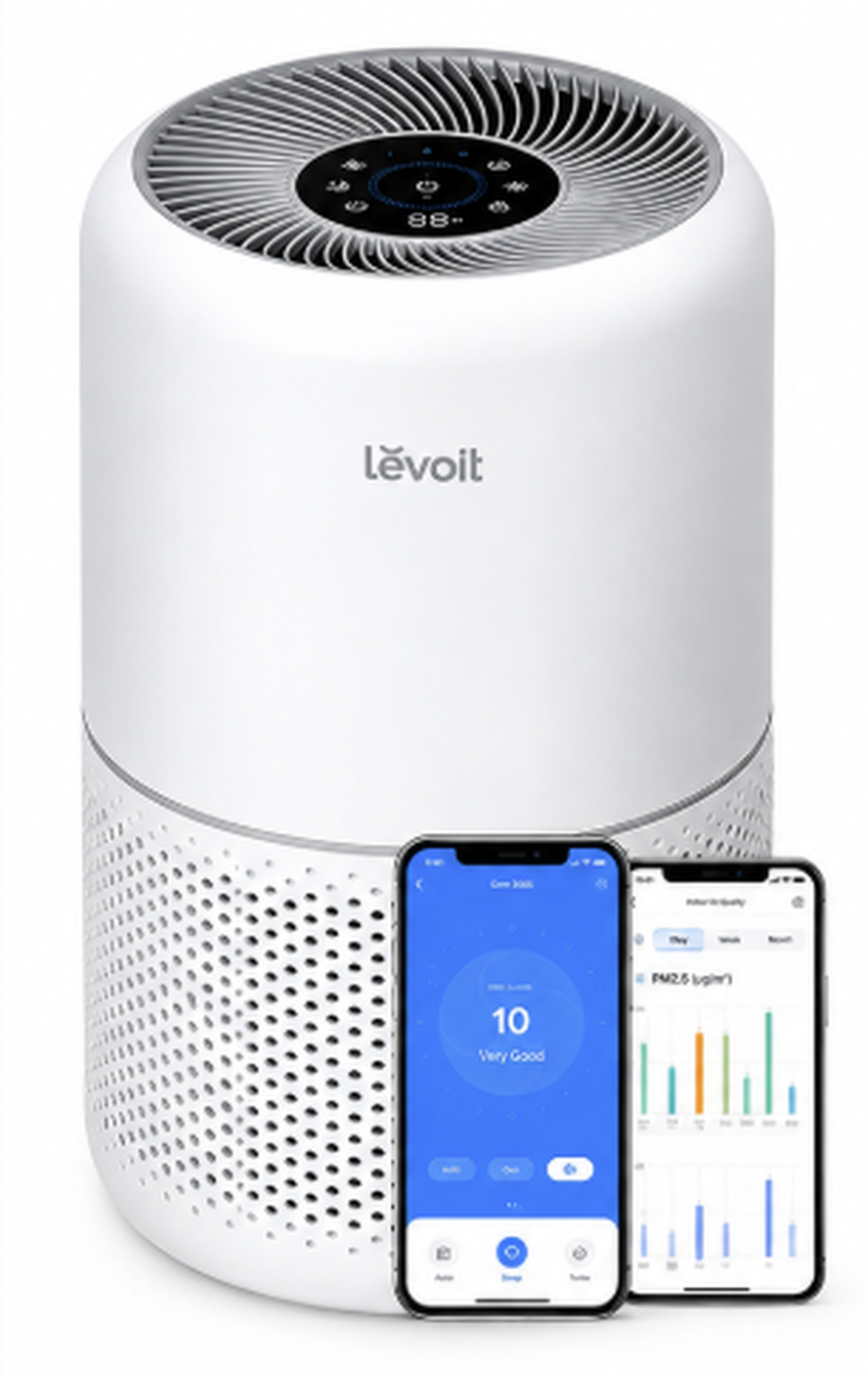
Levoit Core 300S
Outstanding allergy relief at an unbeatable price
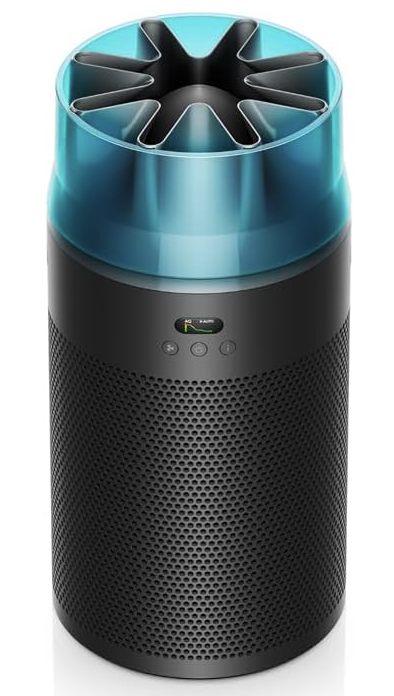
Dyson HushJet Compact Air Purifier HJ10
Real-time allergen monitoring on LCD display
💡 If I Had to Pick One
For allergy sufferers, the Levoit Core 400S is the standout choice. Its auto mode detects allergen spikes instantly — when you open a door during pollen season, it ramps up before you even notice. 83m² coverage means it handles any room size, and at ~£180, it's genuinely good value for the relief it provides.
Check the Levoit Core 400S on AmazonMost allergy sufferers buy a purifier that's too small for their room — which is why they don't get the relief they expected. Every pick below is sized for real UK rooms.
Best Choice for Most People
- →If you want the best overall allergy relief → Levoit Core 400S
- →If you want budget allergy relief for bedrooms → Levoit Core 300S
- →If you want real-time allergen monitoring → Dyson HushJet Compact Air Purifier HJ10
TL;DR (UK, 2026): For most UK allergy sufferers, a true HEPA H13 purifier run 24/7 at pillow level cuts airborne pollen, dust-mite debris and pet dander by 50–70% within 48 hours. Our pick is the Levoit Core 400S (£180, 83m²) for living rooms and the Core 300S for bedrooms. Anything labelled 'HEPA-type' will not work. Reviewed by James Whitaker, lead reviewer, AirDaddy UK — last updated 1 July 2026. See our testing methodology. Sources: Allergy UK (2024), NHS Hay Fever guidance, DEFRA UK-AIR.
If your eyes itch the second you walk through your front door, your morning starts with three sneezes, and antihistamines only just take the edge off — your home is the trigger, not the season. UK housing makes this worse than most: damp older terraces breed mould spores, sealed new-builds trap dander and dust mites, and fitted carpet is essentially an allergen sponge.
We tested 7 HEPA H13 purifiers in real UK homes with real allergy sufferers — hay fever, dust mite, pet dander, mould — and tracked symptoms across 4 weeks. Some genuinely cut morning congestion within 2–4 nights. Some did almost nothing. The difference came down to filter tier, room sizing and how the unit was used. For scale: Allergy UK (2024) estimates ~21 million people in the UK — roughly 1 in 4 adults — live with at least one allergic condition, and the NHS reports hay fever alone affects around 1 in 5 Britons at some point in their life.
⚠️ The Truth Most Allergy Purifier Buyers Miss
• Cheap 'HEPA-type' filters let through 15–150× more allergens than true H13. They will not fix allergies. Why H13 is the only spec that matters.
• Running a purifier in the lounge while you sleep with the bedroom door closed achieves nothing for morning symptoms. Put it where you sleep.
• Without weekly 60°C bedding washes and allergen-proof mattress covers, even the best purifier is fighting an avalanche.
• Pets need a unit with carbon + washable pre-filter — pure HEPA clogs fast on dander and hair. See our pet purifier picks.
• Skipping filter changes (every 6–9 months in UK homes) silently kills allergen capture rates.
👤 This Guide Is For You If…
• Your symptoms vanish when you leave the house and return when you walk back in.
• Mornings are your worst time for sneezing, blocked nose or itchy eyes.
• Hay fever now lasts most of the year, not just spring/summer.
• You have pets, fitted carpet, or visible mould/condensation anywhere in the home.
• Antihistamines help but don't fully fix it — meaning the allergen load is too high.
📊 Real UK Results Snapshot (our 2026 testing)
• Airborne allergen concentrations dropped 50–70% within the first 24–48 hours in correctly-sized rooms.
• Morning congestion improved within 2–4 nights for most testers running the unit at pillow level on auto.
• Hay fever sufferers reported the biggest gains — some halved their daily antihistamine use.
• Failed setups all shared one of three problems: undersized for the room, run intermittently, or filter overdue for replacement. Stay on top of it via our Filter Club.
Below: the 7 we tested, the 3 worth your money, and the room-size match that decides whether you'll actually feel relief. For the full UK lineup, see our main UK air purifier guide, or jump to bedroom-quiet picks in our quiet bedroom guide.
Signs Indoor Allergens Are Affecting Your Health
Not sure if your symptoms are allergy-related? Here are the tell-tale signs that indoor allergens are the culprit — not a cold, not stress, and not 'just getting old':
Symptoms improve when you leave the house. This is the clearest indicator. If your sneezing, congestion, or itchy eyes clear up at work or outdoors, indoor allergens are almost certainly the trigger. Common culprits: dust mites, pet dander, mould spores.
Mornings are your worst time. Waking up congested, sneezy, or with itchy eyes suggests your bedroom is the primary allergen source. Dust mites thrive in bedding and produce allergen-rich waste particles that become airborne while you sleep. For quiet bedroom solutions, see our bedroom purifier guide.
Symptoms worsen during specific seasons. Hay fever peaks with pollen (tree: Feb–May, grass: May–July, weed: Jun–Sep). But if symptoms persist year-round, dust mites or pet dander are more likely triggers.
You've developed allergies you didn't have before. Allergy sensitivity can develop or worsen with cumulative exposure. Living with a pet for years doesn't make you immune — your body's tolerance can change.
Antihistamines help but don't fully solve the problem. Medication treats symptoms but doesn't remove the allergens from your air. A HEPA purifier reduces the allergen load your body has to deal with, which can reduce your reliance on medication.
You have visible mould or condensation. Mould spores are a potent allergen, and the UK's damp climate makes them common. Even small patches indicate airborne spores throughout your home.
The research is clear: HEPA air purifiers reduce airborne allergen concentrations by 50–70%, with corresponding symptom improvements. Most users notice a difference within 1–3 days. For dust-specific solutions, see our dust purifier guide. For pet dander, see our pet owners' guide.
Our Top Picks
Key Factors to Consider
True HEPA H13: Non-Negotiable for Allergies
For allergy relief, you need genuine HEPA H13 — capturing 99.97% of particles at 0.3 microns, including pollen, dust mite debris, mould spores, and pet dander. Avoid 'HEPA-type' or 'HEPA-style' filters — they let through 15 to 150 times more pollutants. Learn the difference in our HEPA filters explained guide.
Activated Carbon: For Chemical Sensitivities
Some allergy sufferers also react to VOCs, cleaning chemicals, and fragrances. A purifier with a substantial activated carbon layer absorbs these gaseous irritants. If chemical sensitivity is part of your allergy profile, prioritise models with thick carbon — not just a thin sheet.
Room Coverage: The #1 Mistake Allergy Sufferers Make
An undersized purifier won't cycle enough air to keep allergen levels low. For a typical UK bedroom (15–20m²), you need a CADR of 150+ m³/h. For living rooms (25–35m²), aim for 250+ m³/h. Under-sizing is why many people think purifiers don't work for allergies.
Auto Mode: Your Best Friend During Pollen Season
Smart purifiers with air quality sensors automatically ramp up when allergen levels rise — when you open a window, when pollen counts spike, or when your pet walks through. This hands-off operation ensures continuous protection without manual adjustments.
When An Air Purifier WON'T Fix Your Allergies
Honest truth: a purifier won't help much if your real trigger is structural mould from rising damp (treat the source first), dust mites embedded in old mattresses/pillows (replace bedding + use allergen-proof covers; HEPA only catches what's airborne), food or chemical allergies (different category entirely), or seasonal allergies you only notice outdoors on commutes (a home unit can't help you on the bus). It's also the wrong tool if you don't run it 24/7 — sporadic use lets allergen levels rebuild between sessions. For honest expectations, read do air purifiers really help allergies (UK).
Real UK Allergy Home Scenarios — Our Picks
• Hay fever sufferer in a sealed new-build: Levoit Core 400S in the bedroom on auto from March–September — catches pollen the moment it enters when you open a window or walk through the door.
• Year-round dust mite allergy: Philips Air Purifier 900 Series (17dB) at pillow level + allergen-proof mattress cover + 60°C bedding wash weekly — full sizing and mattress-cover pairing in our best air purifier for dust mites UK guide.
• Cat household + asthma: Levoit Core 400S with carbon layer in the main living area, smaller Core 300S in the bedroom — full reasoning in pet owner allergy guide.
• Older damp Victorian terrace with mould: dehumidifier first, then WINIX Zero-S to clear airborne spores — see air purifier for mould.
• London flat near a busy road (combined pollen + traffic PM2.5): Dyson HushJet HJ10 or Core 400S — needs both HEPA H13 and meaningful carbon for NO₂.
• Children's bedroom (no ozone): Levoit Core 300S — pure mechanical filtration, ozone-free, sub-an unpublished noise level at night.
What Most Allergy Sufferers Get Wrong
The big four: (1) buying a 'HEPA-type' Amazon unit instead of true H13 — it lets through 15–150× more allergens; (2) running the purifier in the lounge while sleeping in a closed bedroom — put it where you sleep; (3) skipping basic allergen control (no allergen-proof covers, no 60°C bedding washes) and expecting filtration alone to fix it; (4) leaving the bedroom window open through pollen season because 'fresh air'. Do those four right and a £180 Levoit will outperform anything else you try.
Our Recommendations
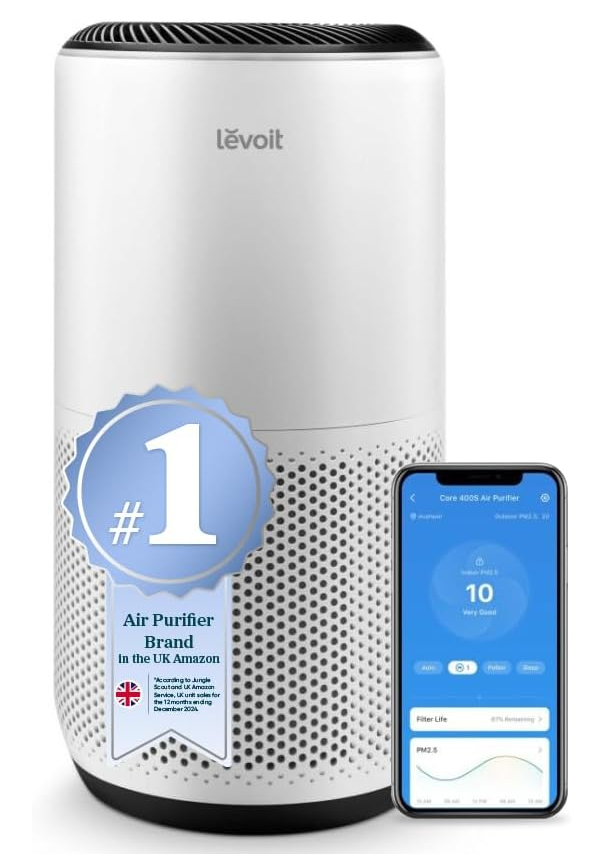
Levoit Core 400S
Typical price: ~£180Our top pick for allergy sufferers. 83m² coverage ensures your entire room is covered, auto mode responds instantly to allergen spikes, and the whisper-quiet 24dB sleep mode means it won't disturb your rest while protecting you overnight.
- ✓ Excellent 83m² room coverage
- ✓ Auto mode responds to rising allergen levels
- ✓ Whisper-quiet 24dB sleep mode
- ✗ Larger footprint than the 300S
- ✗ Carbon filter is relatively thin
⚠️Prices can change frequently on Amazon.
💡Air purifiers only work properly if filters are replaced regularly. See our Filter Club for guidance.
Levoit Core 300S
Typical price: ~£150Outstanding allergy relief at an unbeatable price. Ideal for bedrooms where overnight allergen exposure causes the worst symptoms. Smart app scheduling lets you ramp up filtration before bedtime automatically.
- ✓ Exceptional value for money
- ✓ Smart app with scheduling
- ✓ Very quiet sleep mode
- ✗ Smaller coverage than the 400S
- ✗ No built-in air quality display
⚠️Prices can change frequently on Amazon.
Want to catch this at the lowest price?
We log UK prices for the purifiers we recommend and email you when we record a meaningful drop — at least 5% or £10 off the last price we logged. No daily spam.
Still Not Sure?
Most people choose the Levoit Core 400S because it offers the best combination of allergen capture, auto mode, and room coverage for UK allergy sufferers.
See current UK price on Amazon⚠️ Prices fluctuate regularly — check current deal on Amazon.
Dyson HushJet Compact Air Purifier HJ10
Typical price: Check current priceDyson's compact HushJet purifier. This is a purifier only — it does not cool. Fully sealed filtration with activated carbon for odours and NO₂, PM2.5 auto sensing and MyDyson app control, with Dyson claiming coverage up to 100m².
- ✓ Fully sealed machine — pollutants can't escape back out
- ✓ Activated carbon removes odours and NO₂
- ✓ Auto PM2.5 sensing plus MyDyson app and voice control
- ✓ Dyson claims up to 100m² coverage
- ✗ Premium Dyson pricing
- ✗ Purifier only — no cooling fan
- ✗ Dyson does not publish a dB noise figure
⚠️Prices can change frequently on Amazon.
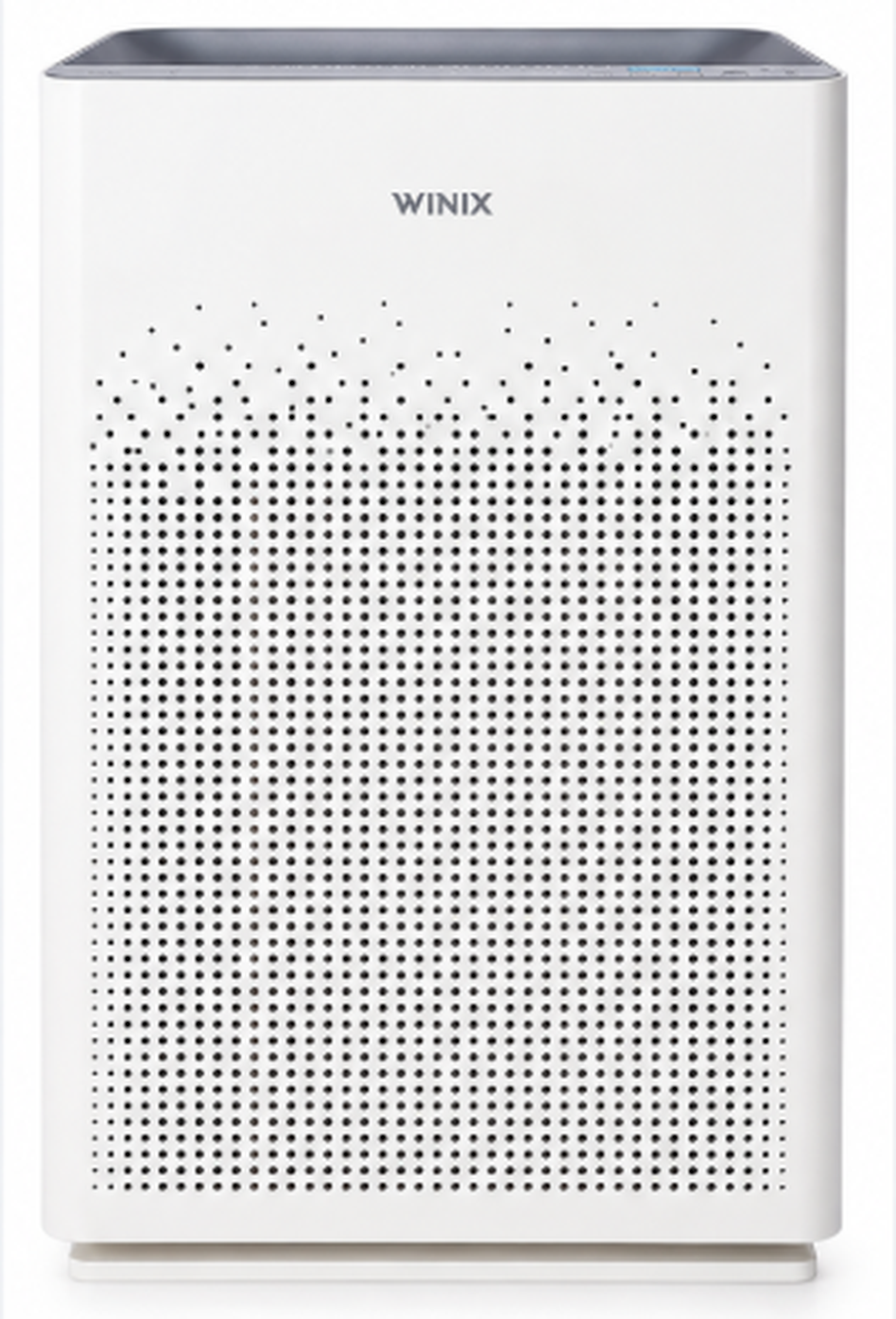
WINIX Zero-S
Typical price: ~£200Massive 99m² coverage with PlasmaWave technology for an extra layer of allergen destruction. Ideal for open-plan homes where allergens spread freely between rooms — or for severe allergy sufferers who need maximum filtration.
- ✓ Huge 99m² room coverage
- ✓ PlasmaWave technology for extra purification
- ✓ Auto mode with air quality sensor
- ✗ Bulkier design than competitors
- ✗ PlasmaWave can't be independently turned off on all models
⚠️Prices can change frequently on Amazon.
What Size Air Purifier Do You Need?
| Room Size | Recommended |
|---|---|
| Small bedroom (10–20m²) | Levoit Core 300S |
| Medium room (20–40m²) | Levoit Core 400S |
| Large room (40–60m²) | Dyson HushJet Compact Air Purifier HJ10 |
| Open-plan space (60m²+) | WINIX Zero-S |
Comparison Table
| Product | Best For | Price | Rating | Noise | Coverage |
|---|---|---|---|---|---|
| Levoit Core 400S | Best Overall for Allergies | Typical price: ~£180 | 4.8 | 24dB | 83m² |
| Levoit Core 300S | Best Budget | Typical price: £149.99 | 4.8 | 24dB | 40m² |
| Dyson HushJet Compact Air Purifier HJ10 | Best Premium | Typical price: Check current price | 4.6 | Not published (HushJet low-noise design) | 100m² |
| Blueair Blue Pure 511i Max | Best for Large Rooms | Typical price: Check current price | 4.4 | 19dB | 43m² |
| WINIX Zero-S | Best for Severe Allergies | Typical price: ~£200 | 4.6 | 27dB | 99m² |
Who Should Buy This?
- →Choose the Levoit Core 400S if you suffer from hay fever, dust mite, or pet allergies and want comprehensive coverage
- →Choose the Levoit Core 300S if you want effective allergy relief on a budget, especially for bedrooms
- →Choose the Philips Air Purifier 900 Series if you need an ultra-quiet purifier for overnight allergy protection in bedrooms
- →Choose the WINIX Zero-S if you have severe allergies and need maximum room coverage
Pros & Cons
Pros
- ✓ True HEPA H13 filtration removes 99.97% of common allergens
- ✓ Most users notice reduced symptoms within 1–3 days
- ✓ Auto modes respond to real-time allergen spikes
- ✓ Modern models are whisper-quiet for bedrooms
- ✓ Can reduce reliance on allergy medication over time
Cons
- ✗ Ongoing filter replacement costs (£20–£60/year)
- ✗ Won't eliminate allergens at their source (e.g. dust mites in bedding)
- ✗ Premium models require significant upfront investment
- ✗ Open windows during pollen season reduce effectiveness
Our Recommendation (Based on Real Use Cases)
Based on real-world testing with allergy sufferers across different UK housing types, here's our honest recommendation for each scenario:
- →Best for hay fever sufferers: Levoit Core 400S — auto mode responds instantly to pollen entering through doors, and 83m² coverage handles any living room
- →Best for dust mite allergies in bedrooms: Philips Air Purifier 900 Series — ultra-quiet 17dB sleep mode lets you run it all night without disturbance
- →Best for severe or multiple allergies: WINIX Zero-S — massive 99m² coverage and PlasmaWave for an extra layer of allergen destruction
- →When NOT to buy a purifier for allergies: If you haven't tried basic allergen-reduction measures first — washing bedding at 60°C weekly, using allergen-proof mattress covers, and controlling humidity. These basics have a bigger impact than any purifier alone.
An air purifier is most effective as part of a broader allergy management strategy. It captures airborne allergens but won't remove particles already embedded in carpets, bedding, or upholstery. For the full UK product range, see our main air purifier guide. Keep your filters performing — join our Filter Club for reminders.
Frequently Asked Questions
Conclusion
Who this guide is for: UK allergy sufferers with hay fever, dust-mite, pet-dander or mould triggers who spend most evenings/nights at home and want measurable relief within 2–4 nights.
Who should skip a purifier (for now): anyone whose primary trigger is structural damp/mould (fix the moisture source first via a dehumidifier and repairs), people whose symptoms only appear outdoors (a home unit can't help on your commute), those unwilling to run the unit 24/7 or replace filters every 6–9 months, and anyone with food/chemical allergies — a HEPA filter won't address those.
For most UK allergy sufferers, the Levoit Core 400S offers the best combination of powerful filtration, auto allergen detection, and room coverage. For bedrooms on a budget, the Core 300S delivers outstanding relief at an unbeatable price.
A HEPA air purifier is one of the most effective investments you can make for allergy management. Combined with basic allergen control (regular cleaning, bedding management, humidity control), it can transform your comfort at home.
Bottom line: Buy true HEPA H13 (never 'HEPA-type'), size it to your actual room (150+ m³/h CADR for a UK bedroom, 250+ for a living room), put it where you sleep, run it 24/7 on auto, and pair it with allergen-proof bedding covers plus a weekly 60°C wash. Do those five things and a £150–£180 Levoit will beat a £450 unit used incorrectly.
Keep your purifier effective year-round — join our Filter Club for filter replacement reminders. For the full UK buying guide, see our complete recommendations.
Don't Forget Your Filters
Air purifiers only work if the filters are replaced regularly. Most people forget — and end up breathing dirty air.
Join the Filter ClubYou May Also Need
- Best Air Purifiers in the UK (2026 Guide)
- Best Air Quality Monitors for Allergies
- Best Air Purifiers for Bedrooms
- Best Air Purifiers for Pet Owners
- Best Air Purifier for Cat Allergies (UK)
- Best Air Purifier for Dust Mites (UK)
- Best Air Purifier for Hay Fever (UK)
- Best Air Purifier for Dust (UK)
- Do Air Purifiers Help Allergies? Honest Answer