Air Quality Monitors
Track what you breathe. Reviews and guides to help you find the right air quality monitor for your home, bedroom, or gym.
The short answer
An air quality monitor measures what is actually in your indoor air — PM2.5, CO₂, VOCs, temperature and humidity — so you can act on numbers rather than guesswork. For UK homes the specification that matters is sensor type: insist on a laser-scattering PM2.5 sensor and a true NDIR CO₂ sensor. Devices advertising 'eCO₂' estimate carbon dioxide from VOC readings and routinely misreport by 500–1,000 ppm. Expect £50–£120 for a reliable single-room unit, and place it at breathing height (1–1.5m), away from windows, doors and cookers.
- •Pollutants tracked: PM2.5 (cooking, candles, traffic infiltration), CO₂ (occupancy and ventilation), TVOCs (paint, cleaning products, furniture off-gassing), humidity (mould and dust mites).
- •Technology: NDIR beats eCO₂ for carbon dioxide; laser scattering beats infrared LED for particulates; MOX gas sensors give TVOC trends rather than absolute values.
- •Health: WHO sets a 24-hour PM2.5 guideline of 15µg/m³, and CO₂ above 1,000 ppm is associated with drowsiness, fragmented sleep and reduced cognitive performance.
- •Practice: a monitor is a diagnostic, not a treatment — pair it with a true H13 HEPA purifier to change the readings, and re-test before and after to prove the effect.
What to measure, what 'good' looks like, and what to do
| Metric | Sensor to insist on | Good | Act now | Fix |
|---|---|---|---|---|
| PM2.5 | Laser scattering | Under 10µg/m³ | Over 25µg/m³ | H13 HEPA purifier, extractor when cooking |
| CO₂ | NDIR (never eCO₂) | Under 1,000 ppm | Over 2,000 ppm | Purge ventilation, trickle vents open |
| TVOC | MOX gas sensor | Under 300µg/m³ | Over 500µg/m³ | Activated carbon, low-VOC products |
| Humidity | Capacitive RH | 40–60% | Over 60% | Dehumidifier, extractor fans |
| Temperature | Thermistor | 18–21°C | Under 16°C | Heating and insulation (condensation risk) |
Sources & standards
- WHO — Air quality guidelines — PM2.5 24-hour guideline of 15µg/m³ used as our monitor benchmark.
- NHS — Air pollution — health effects of particulate exposure on asthma, COPD and heart disease.
- DEFRA UK-AIR — official UK outdoor readings for comparing against your indoor numbers.
Reviewed by James Whitaker, Indoor Air Quality Lead — 3 August 2026. Benchmarks from AirDaddy Labs reference-unit comparison testing of six UK consumer monitors.
What Is an Air Quality Monitor?
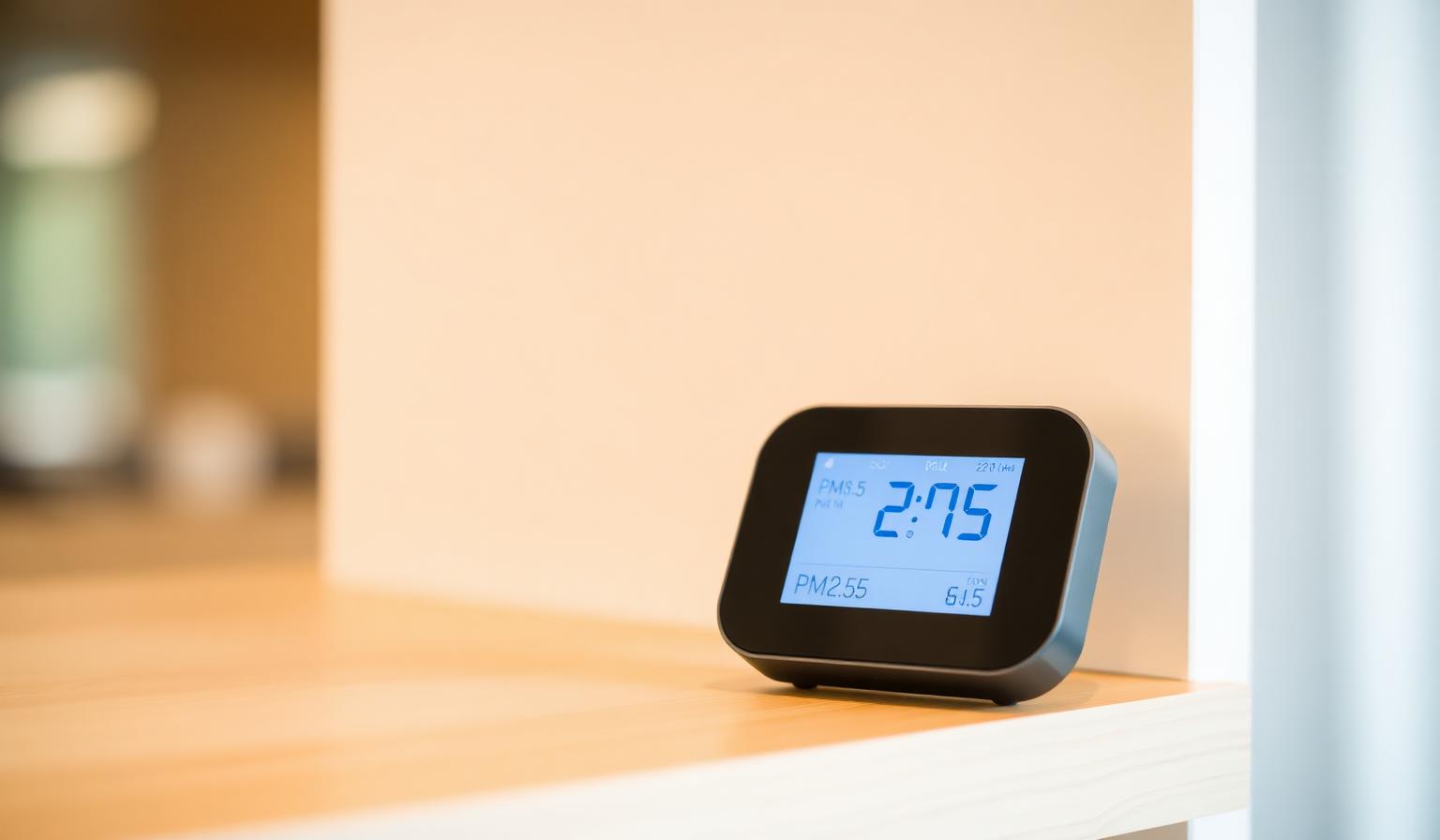
An air quality monitor is a device that measures pollutants and conditions in your indoor air — giving you real-time data on what you're breathing. Unlike an air purifier, which cleans the air, a monitor tells you what's in it so you can make informed decisions.
Most people have no idea that cooking can spike PM2.5 levels above those found on polluted city streets, or that their bedroom CO2 levels exceed 2,000 ppm overnight — causing poor sleep and morning grogginess. A monitor reveals these invisible problems.
Why Monitor Your Indoor Air Quality?
Indoor air pollution in UK homes can be two to five times worse than outdoor levels. Common sources include cooking fumes, cleaning products, mould, pet dander, traffic pollution, and even your own breathing (CO2). Without monitoring, these problems remain invisible.
A monitor helps you: identify pollution sources, verify your air purifier is working, optimise ventilation habits, maintain healthy humidity levels, and track improvements over time. It's the difference between guessing and knowing.
Common Indoor Pollutants to Monitor
PM2.5
Fine particles from cooking, dust, pollen, and traffic that penetrate deep into your lungs.
CO2
Carbon dioxide from breathing that builds up in enclosed rooms, causing drowsiness and poor sleep.
VOCs
Volatile organic compounds from paint, cleaning products, furniture, and air fresheners.
Humidity
Excess moisture that encourages mould growth and dust mite proliferation in UK homes.
When Should You Get an Air Quality Monitor?
- • You suffer from allergies, asthma, or respiratory issues and want to identify triggers
- • You've bought an air purifier and want to verify it's working
- • You wake up feeling groggy — bedroom CO2 may be the cause
- • You live near a busy road and want to track pollution ingress
- • You have a home gym and want to optimise your training air quality
- • You're concerned about mould and need to track humidity levels
Air Quality Monitor Guides
Expert reviews, buying guides, and explainers to help you choose the right monitor.