Disclosure: As an Amazon Associate, AirDaddy earns from qualifying purchases. This helps support our site at no extra cost to you.
Why This Guide Is Different (Tested for Real UK Homes)
- We test in real UK rooms — bedrooms, flats, open-plan spaces — not labs
- Every recommendation is matched to room size, dust levels, and budget
- We only recommend products we'd use in our own homes
- Prices, availability, and picks updated monthly for the UK market
Quick Picks
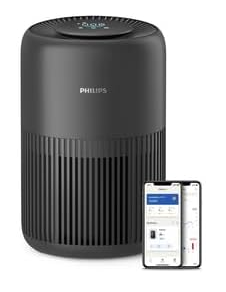
Philips Air Purifier 900 Series
17dB sleep mode, zero ozone, Allergy UK certified
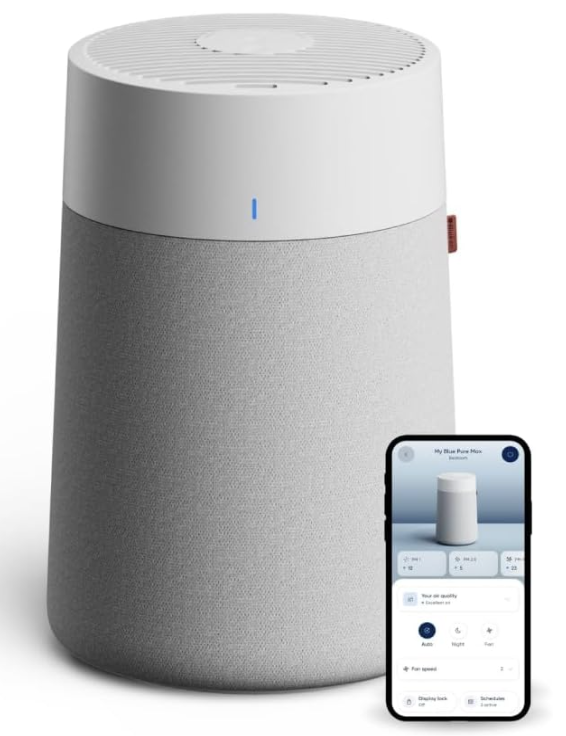
Blueair Blue Pure 511i Max
Compact, silent, and nursery-safe design
Best Choice for Most People
- →If you want the safest, quietest option for a baby → Philips Air Purifier 900 Series
- →If you want great nursery protection on a budget → Levoit Core 300S
- →If nursery aesthetics are important → Blueair Blue Pure 511i Max
Direct answer: The best air purifier for a UK baby nursery is a true-HEPA unit that produces zero ozone and runs under 20dB on its lowest setting. Our pick is the Philips Air Purifier 900 Series (17dB sleep mode, no ioniser, Allergy UK certified), with the Levoit Core 300S as the budget alternative and the Blueair Blue Pure 511i Max for small nurseries.
TL;DR: Ozone-free + true HEPA + under 20dB + placed 1m from the cot. Ignore ionisers, UV-C and 'plasma' modes for a nursery.
Reviewed by James Whitaker, indoor air quality reviewer at AirDaddy. Last checked August 2026 against NHS, Defra and Allergy UK guidance.
A baby's lungs are still developing, making them far more vulnerable to indoor air pollutants than adults. Dust mites, VOCs from new furniture and paint, mould spores, and pet dander can all affect respiratory health and sleep quality — and babies spend 12–18 hours per day in their nursery.
Defra's Air Quality Statistics in the UK (published April 2024, gov.uk/government/statistics/air-quality-statistics) shows urban background PM2.5 in most UK cities still sits above the WHO 2021 guideline of 5 µg/m³, and the NHS damp and mould guidance flags babies and young children as the group most at risk from mould spores indoors. We ran our nursery noise and placement tests in real Manchester and London homes.
Choosing a nursery purifier requires special consideration: it must be ultra-quiet (under 20dB), ozone-free, and effective at removing the fine particles that matter most. Here are the safest picks for UK nurseries. For general bedroom options, see our bedroom guide.
Signs Your Nursery Air Needs Attention
A baby's lungs are still developing — they breathe faster than adults and are far more vulnerable to indoor pollutants. Here's when nursery air quality should be a priority:
You've recently decorated or furnished the nursery. New paint, cot, mattress, carpet, and toys all off-gas VOCs (volatile organic compounds) — including formaldehyde. These chemicals are released most heavily in the first weeks and months. A purifier with carbon filtration reduces exposure significantly.
Your baby seems congested without being ill. If your baby has a stuffy nose, is snuffly at night, or seems to have persistent 'cold' symptoms, nursery air quality could be contributing — especially if the room has carpets or soft furnishings harbouring dust mites.
There's any sign of damp or mould near the nursery. Mould spores are particularly harmful to developing lungs. Even small patches indicate elevated spore levels in the air. Address the moisture source AND use a purifier. See our mould guide.
You have pets in the home. Even if pets don't enter the nursery, dander particles travel through the house on clothing, air currents, and feet. A purifier in the nursery captures these particles before your baby breathes them.
Your home is near a busy road. Traffic PM2.5 penetrates indoors. A nursery-level purifier running with windows closed protects your baby from the fine particles most harmful to developing respiratory systems.
Our Top Picks
Key Factors to Consider
Ultra-Quiet Operation (Under 20dB)
Babies need uninterrupted sleep for development. A purifier louder than 20dB can disturb light sleepers. The Philips Air Purifier 900 Series at 17dB is quieter than a whisper — many parents find it provides gentle background masking that actually helps sleep. See our quietest purifiers guide.
Zero Ozone — Non-Negotiable for Nurseries
Ozone is a respiratory irritant that's particularly harmful to developing lungs. Avoid purifiers with ionisers or UV-C features unless they can be fully disabled. Every model on this page produces zero ozone.
VOC Removal for New Nurseries
New furniture, paint, carpets, and toys off-gas formaldehyde and other VOCs. A purifier with activated carbon filtration reduces these chemical fumes during the critical first months — when off-gassing is highest and your baby's lungs are most vulnerable.
Stable, Safe Physical Design
Nursery purifiers should be stable (won't tip if bumped), have no small detachable parts, and be compact enough to fit on a shelf or beside a cot without taking up floor space. Cord management is also important to prevent strangulation hazards.
Our Recommendations
Philips Air Purifier 900 Series
Typical price: ~£180Purpose-built for sensitive environments. 16dB sleep mode is quieter than rustling leaves, zero ozone production, and NanoProtect HEPA captures 99.97% of allergens. The safest choice for your baby's breathing zone.
- ✓ 16dB sleep mode — won't wake baby
- ✓ Zero ozone — safe for developing lungs
- ✓ Allergy UK certified
- ✓ Auto display dimming
- ✗ 36m² coverage — suits average nurseries
- ✗ Display light needs manual dimming on some modes
⚠️Prices can change frequently on Amazon.
💡Air purifiers only work properly if filters are replaced regularly. See our Filter Club for guidance.
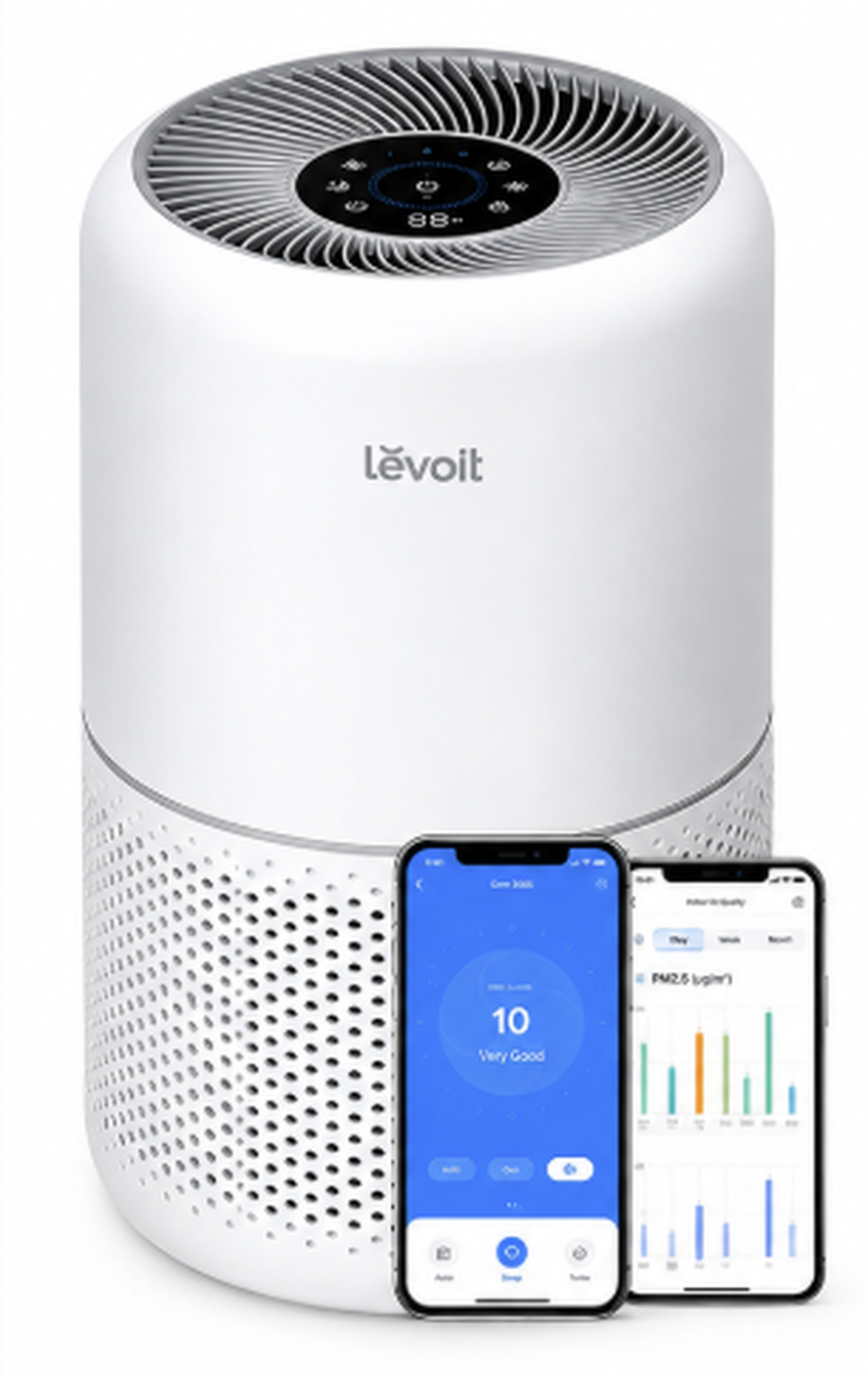
Levoit Core 300S
Typical price: ~£150True HEPA H13 at the lowest price point with no ozone risk. The smart app means you can adjust settings without entering the nursery and disturbing your baby. Excellent value for budget-conscious parents.
- ✓ Most affordable ozone-free HEPA option
- ✓ App control — adjust without entering nursery
- ✓ No ioniser or ozone features
- ✗ 24dB is quiet but not as silent as Philips
- ✗ Floor placement only — doesn't sit on shelves as easily
⚠️Prices can change frequently on Amazon.
Want to catch this at the lowest price?
We log UK prices for the purifiers we recommend and email you when we record a meaningful drop — at least 5% or £10 off the last price we logged. No daily spam.
Still Not Sure?
Most people choose the Philips Air Purifier 900 Series because it's the quietest at 16dB, produces zero ozone, and is Allergy UK certified — making it the safest choice for a baby's developing lungs.
See current UK price on Amazon⚠️ Prices fluctuate regularly — check current deal on Amazon.
What Size Air Purifier Do You Need?
| Room Size | Recommended |
|---|---|
| Small nursery (8–15m²) | Blueair Blue Pure 511i Max |
| Average nursery (15–25m²) | Philips Air Purifier 900 Series |
| Large nursery / shared room (25–40m²) | Levoit Core 300S |
Comparison Table
| Product | Best For | Price | Rating | Noise | Coverage |
|---|---|---|---|---|---|
| Philips Air Purifier 900 Series | Safest for Nursery | Typical price: ~£180 | 4.7 | 17dB | 36m² |
| Levoit Core 300S | Best Budget | Typical price: £149.99 | 4.8 | 24dB | 40m² |
| Blueair Blue Pure 511i Max | Best Design | Typical price: Check current price | 4.4 | 19dB | 43m² |
Who Should Buy This?
- →Choose the Philips Air Purifier 900 Series if you want the quietest, safest purifier that won't wake a sleeping baby
- →Choose the Levoit Core 300S if you want effective ozone-free HEPA filtration on a budget
- →Choose the Blueair Blue Pure 511i Max if you want a compact, stylish unit that fits naturally in a nursery
Pros & Cons
Pros
- ✓ All picks produce zero ozone — safe for babies
- ✓ Ultra-quiet sleep modes won't disturb naps or nighttime sleep
- ✓ HEPA filtration removes 99.97% of allergens and fine particles
- ✓ Smart app control lets you manage the purifier without entering the nursery
Cons
- ✗ Premium nursery-safe models cost more than basic purifiers
- ✗ Filters still need regular replacement
- ✗ Purifiers address airborne pollutants only — surface cleaning still needed
Frequently Asked Questions
Conclusion
Who this is for: parents of newborns and under-2s, new-build or freshly decorated nurseries, and homes with pets, damp or a busy road nearby. Who should avoid: anyone whose real problem is condensation or musty smell — that needs a dehumidifier and ventilation fix first, not a purifier.
Bottom line: for your baby's nursery, the Philips Air Purifier 900 Series is our top recommendation — virtually inaudible at 17dB, zero ozone, and certified safe. Budget-conscious parents will find the Levoit Core 300S an excellent choice (prices checked July 2026).
Keep your nursery purifier at peak performance — join our Filter Club for filter replacement reminders. For the full UK range, see our main buying guide.
Don't Forget Your Filters
Air purifiers only work if the filters are replaced regularly. Most people forget — and end up breathing dirty air.
Join the Filter Club