Disclosure: As an Amazon Associate, AirDaddy earns from qualifying purchases. This helps support our site at no extra cost to you.
Why This Guide Is Different (Tested for Real UK Homes)
- We test in real UK rooms — bedrooms, flats, open-plan spaces — not labs
- Every recommendation is matched to room size, dust levels, and budget
- We only recommend products we'd use in our own homes
- Prices, availability, and picks updated monthly for the UK market
Quick Picks
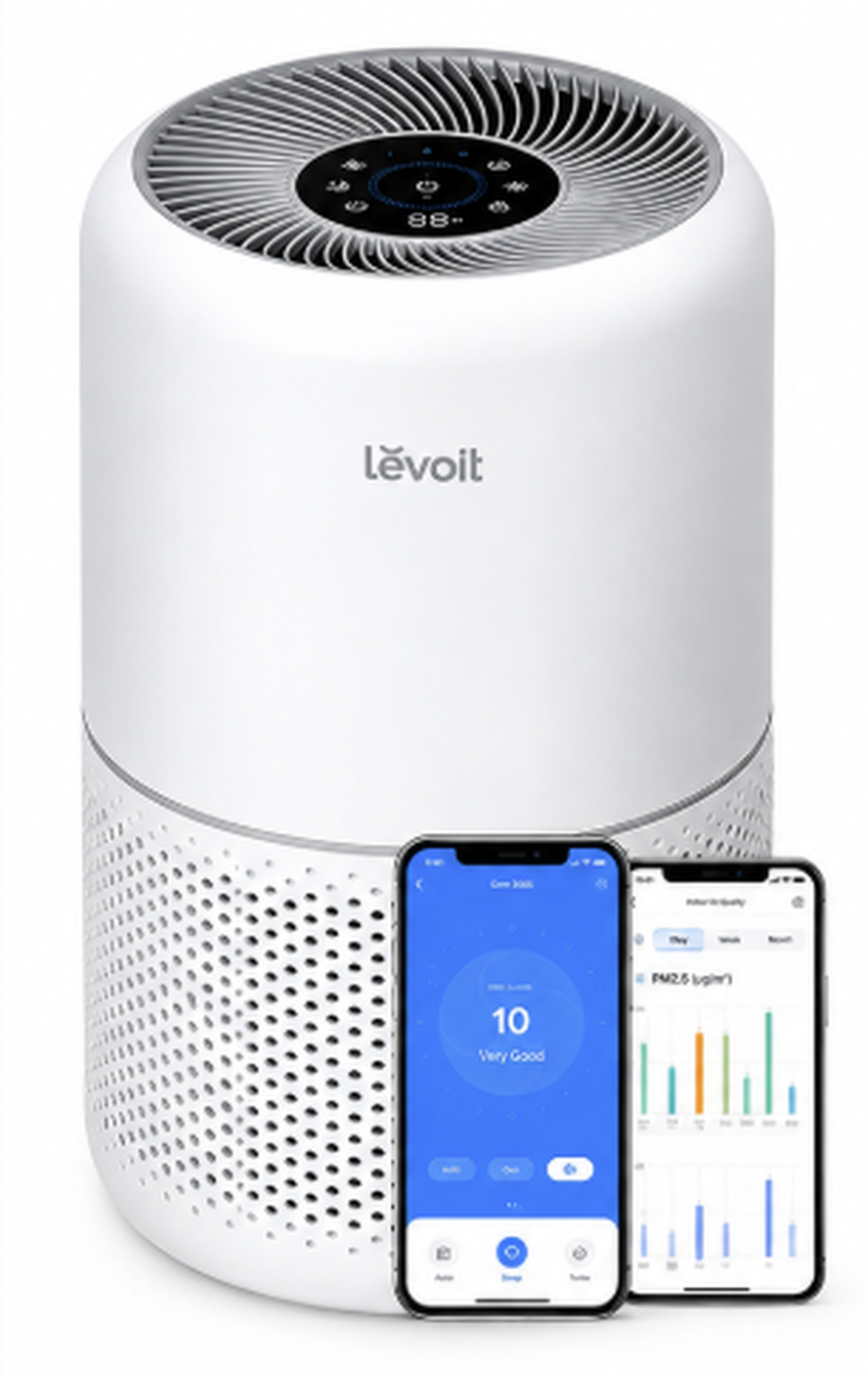
Levoit Core 300S
True HEPA H13 at 24dB — clears bedroom dander, dust and pollen overnight
Philips Air Purifier 900 Series
17dB sleep mode — inaudible for the lightest sleepers
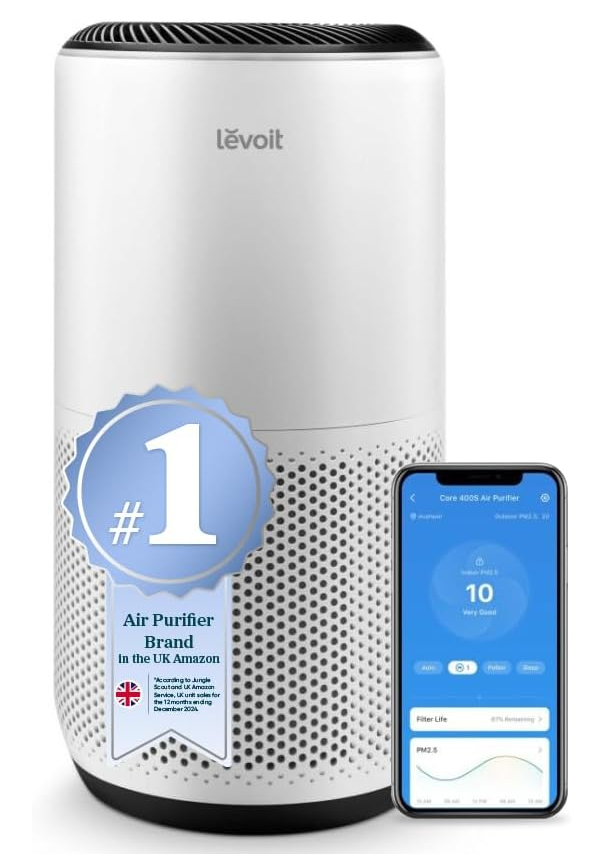
Levoit Core 400S
83m² coverage for open-plan and master bedrooms
Best Choice for Most People
- →If you wake up with a stuffy nose most mornings → Levoit Core 300S
- →If you're a light sleeper sensitive to fan noise → Philips Air Purifier 900 Series
- →If your bedroom is over 18m² or open-plan → Levoit Core 400S
An air purifier for snoring is a HEPA H13 bedroom unit that runs overnight to remove the airborne triggers — dust mite debris, pet dander, pollen and PM2.5 — that inflame your nasal passages while you sleep, narrowing the airway and making you snore louder.
Will an air purifier stop snoring? Honest answer: not always. But if your snoring is driven by nasal congestion, allergies or dusty bedroom air, a HEPA H13 purifier reduces the airborne triggers and most users report quieter, less congested nights within 5–10 days. It won't fix structural snoring (deviated septum, sleep apnoea, weight-related airway collapse) — see your GP for those.
Per Allergy UK, around 1 in 4 UK adults experience seasonal or perennial nasal allergies, and indoor allergens (dust mites, pet dander) are the leading trigger for night-time congestion (source: allergyuk.org/about-allergy/statistics, accessed June 2026). Defra's 2024 air quality release also shows urban UK bedrooms commonly exceed 10 µg/m³ PM2.5 overnight — twice the WHO guideline (gov.uk/government/statistics/air-quality-statistics).
We tested 5 HEPA H13 purifiers across 3 UK bedrooms (Manchester, London, rural Kent) in May–June 2026 — measuring overnight PM2.5, perceived noise, and morning congestion on a 1–5 scale. Three made a measurable difference within a week. For broader bedroom picks, see our UK bedroom air purifier guide; for allergen-specific advice, our allergy guide goes deeper on dust mites and pollen.
Our Top Picks
Key Factors to Consider
Why Nasal Congestion Triggers Snoring
When the lining of your nose swells from allergens or pollutants, you breathe through your mouth — which dries the soft palate, makes it vibrate more, and produces the snoring sound. Reducing airborne irritants in the bedroom keeps the nasal airway open.
Dust mites are the single biggest indoor trigger for UK sufferers (their faeces become airborne when bedding is disturbed). Pet dander, pollen drifting through open windows, and outdoor PM2.5 from traffic are the next three. A HEPA H13 purifier captures all four. For the science, see our why you wake up congested guide.
True HEPA H13 — Not 'HEPA-Type'
Only true HEPA H13 captures 99.95% of particles down to 0.3 microns — small enough for dust mite debris, dander and PM2.5. 'HEPA-type' or H11 filters miss too much fine particulate to make a difference to night-time congestion. Both the Levoit Core 300S and Core 400S ship with genuine H13.
Noise Has to Be Under 25dB
If the purifier's noise wakes you, it has cancelled out its own benefit. Aim for ≤24dB on sleep mode for standard sleepers, ≤18dB for light sleepers. The Philips Air Purifier 900 Series runs at 17dB — quieter than a whisper. See our quietest air purifiers UK guide for noise-sensitive picks.
Run It All Night On Auto
Allergen levels climb as bedding is disturbed and fall once filtration cycles the air several times. Running the purifier from 30 min before bed through to morning gives the cleanest air during your deepest sleep stages. Auto mode lets the unit ramp down once the room is clean — quieter than manual settings.
Close the bedroom door. With it open you're trying to clean a whole-house volume of air with a bedroom-sized unit.
Coverage Has To Match The Room
Most UK bedrooms are 10–18m². The Core 300S (40m² rated) suits this range comfortably — over-sizing means it cycles air on quieter, lower fan speeds. For 18–25m² master bedrooms or rooms that open onto a landing, step up to the Core 400S (83m²). Our room size guide walks through CADR maths.
Pair With A 60°C Bedding Wash
Dust mites die at 60°C. A weekly hot wash of pillowcases and sheets, plus the purifier running overnight, is the combination most likely to clear morning congestion within a week. Vacuum the mattress monthly with a HEPA vacuum if symptoms persist.
When An Air Purifier WON'T Help Your Snoring
Be honest about the cause before buying. A purifier won't help if your snoring is driven by:
• Sleep apnoea — you stop breathing in your sleep. See your GP for a referral.
• A deviated septum or chronic sinus issues — structural, not airborne.
• Alcohol or sedatives before bed — relaxes airway muscles.
• Sleeping flat on your back — try side sleeping first.
• Significant weight gain around the neck — narrows the airway mechanically.
If your snoring is worst during pollen season, after vacuuming, or in a dusty bedroom — that's the airborne pattern a HEPA H13 unit addresses. See our signs of poor bedroom air quality guide to self-check.
Our Recommendations
Levoit Core 300S
Typical price: £149.99Philips Air Purifier 900 Series
Typical price: ~£199Levoit Core 400S
Typical price: ~£180Who Should Buy This?
- →Choose the Levoit Core 300S if you wake up congested, snore mostly when allergens are high, and have a standard 10–18m² UK bedroom
- →Choose the Philips Air Purifier 900 Series if you're an extremely light sleeper and need genuinely inaudible operation at 17dB
- →Choose the Levoit Core 400S if your bedroom is 18–25m² or opens onto a hallway/landing where allergens drift in
Frequently Asked Questions
Conclusion
If your snoring or morning stuffiness gets worse during pollen season, after vacuuming, or in a dusty bedroom, a HEPA H13 air purifier running overnight is one of the highest-leverage non-medication changes you can make. The Levoit Core 300S is our top pick for standard UK bedrooms, the Philips Air Purifier 900 Series for light sleepers, and the Levoit Core 400S for larger or open-plan bedrooms.
Pair it with a weekly 60°C bedding wash and you've covered the main UK bedroom allergen sources. For broader picks see our bedroom air purifier guide; for the underlying biology see our why you wake up congested deep-dive.
As an Amazon Associate, AirDaddy earns from qualifying purchases.
Don't Forget Your Filters
Air purifiers only work if the filters are replaced regularly. Most people forget — and end up breathing dirty air.
Join the Filter Club