Disclosure: As an Amazon Associate, AirDaddy earns from qualifying purchases. This helps support our site at no extra cost to you.
Why This Guide Is Different (Tested for Real UK Homes)
- We test in real UK rooms — bedrooms, flats, open-plan spaces — not labs
- Every recommendation is matched to room size, dust levels, and budget
- We only recommend products we'd use in our own homes
- Prices, availability, and picks updated monthly for the UK market
Quick Picks
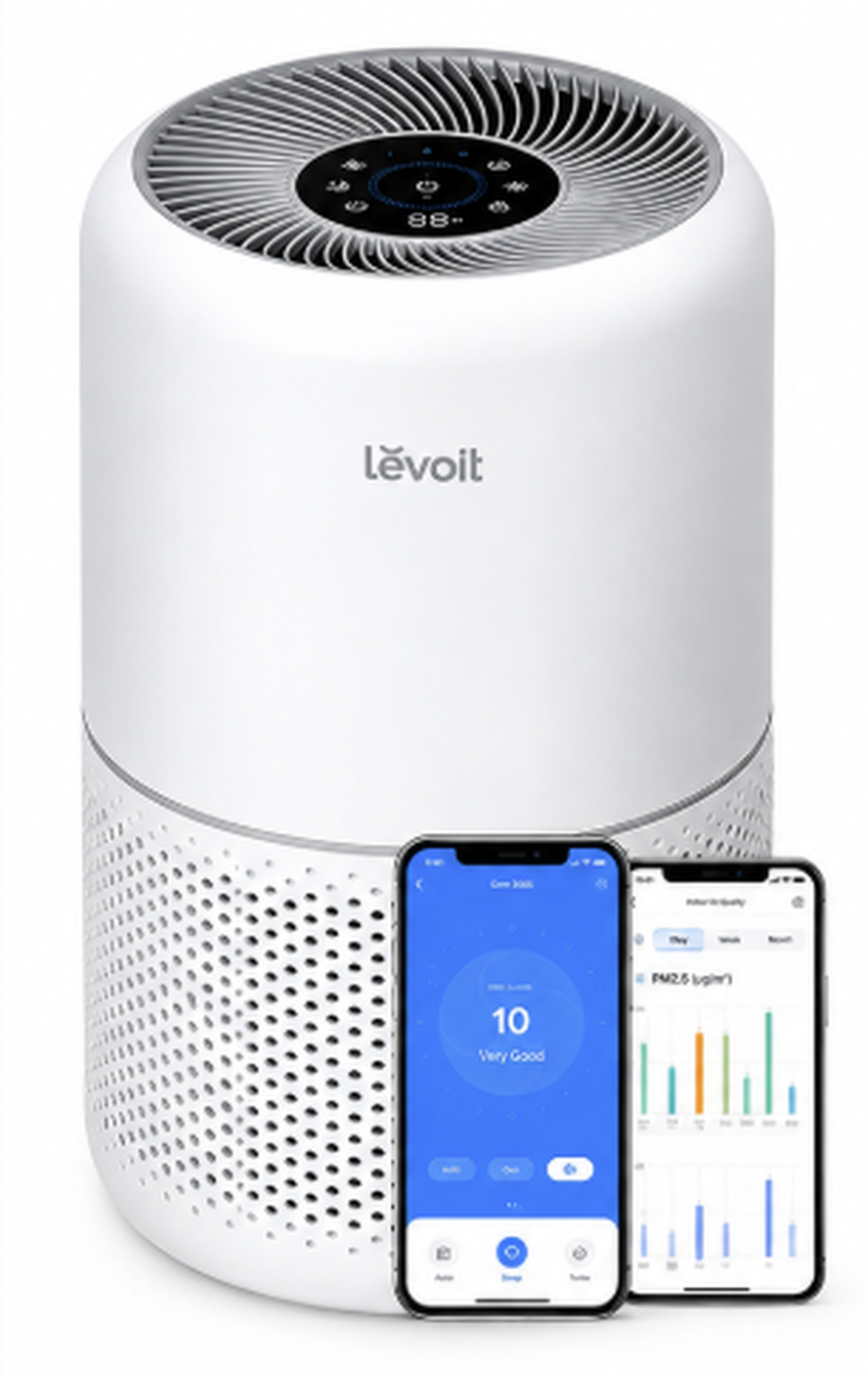
Levoit Core 300S
Immediately reduces PM2.5 and allergens
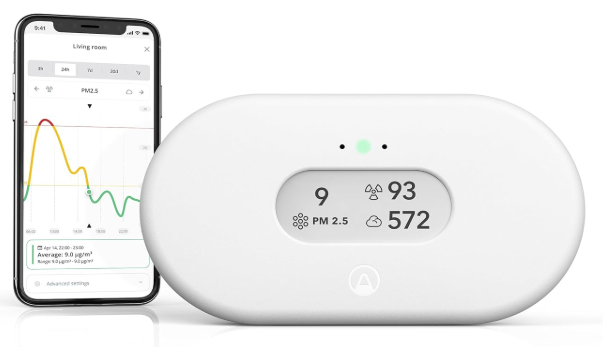
Airthings 2960 View Plus
Tracks CO₂, VOCs, radon, and humidity
Best Choice for Most People
- →If you want to immediately improve your air → HEPA Air Purifier
- →If you want to understand what's in your air → Air Quality Monitor
- →If you have specific health symptoms → Start with our signs guide
We spend up to 90% of our time indoors — yet most of us never consider the quality of the air we're breathing at home. According to the Royal College of Physicians, indoor air pollution contributes to 99,000 deaths annually across Europe.
The air inside your home can be 2–5x more polluted than outdoor air. Cooking fumes, cleaning products, mould spores, furniture off-gassing, and trapped particulate matter all accumulate in modern, energy-efficient homes. This guide explains what's in your air, how it affects your body, and what you can do about it. For purifier recommendations, see our UK buying guide.
Signs Poor Indoor Air Is Affecting Your Health
Most people don't realise their home's air is making them unwell because the effects are gradual and easy to blame on other things. Here are the warning signs:
Persistent morning congestion or headaches. If you wake up stuffed up or with a dull headache that clears by mid-morning, bedroom air quality is almost certainly contributing. CO₂ buildup, dust mite allergens, and stale air accumulate overnight in sealed rooms.
Symptoms that improve when you leave the house. The clearest indicator. If allergies, fatigue, or irritation improve when you go outside or to work, your home's air is the problem — not a general health issue.
Brain fog and difficulty concentrating. Elevated CO₂ (above 1,000 ppm) causes measurable cognitive decline. Research from Harvard showed a 15% drop in cognitive function at 950 ppm — a level many UK bedrooms exceed overnight.
Unexplained fatigue despite adequate sleep. Poor air quality fragments sleep by causing micro-awakenings you don't remember. Research from the Technical University of Denmark found that participants in well-ventilated rooms reported 60% better sleep quality. See our sleep and air quality guide.
Frequent colds or respiratory infections. Chronic exposure to PM2.5 and mould spores weakens respiratory defences. If you catch every cold going around, your indoor air may be suppressing your immune response.
Dry eyes, throat, or skin — especially in winter. Central heating reduces humidity while stirring up dust. The combination of dry air and elevated particulate matter irritates mucous membranes.
Our Top Picks
Key Factors to Consider
PM2.5: The Particles That Enter Your Bloodstream
Fine particles under 2.5 microns penetrate deep into your lungs and enter your bloodstream. Sources: cooking, candles, incense, traffic pollution seeping indoors, and tobacco smoke. Long-term exposure is linked to cardiovascular disease, reduced life expectancy, and cognitive decline. A HEPA purifier reduces PM2.5 by up to 80% in a single room. For dust-specific solutions, see our dust guide.
VOCs: The Invisible Chemicals You're Breathing
Volatile organic compounds are released by household products: paints, cleaning sprays, air fresheners, new furniture, and carpets. Common VOCs include formaldehyde, benzene, and toluene. Short-term: headaches, dizziness, eye irritation. Long-term: liver damage and certain cancers. Activated carbon filters absorb most VOCs. For more detail, see our VOC guide.
CO₂: Why You Feel Tired in Your Own Home
Elevated CO₂ (above 1,000 ppm) causes drowsiness, reduced concentration, and headaches. Two adults in a sealed bedroom can push CO₂ above 2,000 ppm within hours. Air purifiers don't reduce CO₂ — you need ventilation. Brief window opening (5–10 min, 2–3x daily) combined with a purifier gives the best results.
Mould and Biological Pollutants
The NHS estimates 1 in 5 UK homes has a damp or mould problem. Mould spores trigger allergies, asthma, and chronic respiratory illness. Dust mites (thriving above 60% humidity) produce potent allergens. For mould-specific solutions, see our mould guide.
The Sleep Connection
Research consistently shows that better air quality leads to deeper, more restorative sleep. Lower CO₂, reduced PM2.5, and controlled humidity all contribute to better overnight recovery. Air quality is arguably the most overlooked factor in sleep hygiene. See our bedroom purifier guide.
Our Recommendations
Levoit Core 300S
Typical price: ~£150The most cost-effective way to immediately reduce PM2.5 and allergens. True HEPA H13 captures 99.97% of particles. Start with your bedroom — that's where clean air makes the biggest health difference.
- ✓ Reduces PM2.5 by up to 80% in a room
- ✓ Smart app tracks air quality
- ✓ Affordable entry to healthier air
- ✗ Doesn't monitor CO₂ or VOCs
- ✗ Cleans one room at a time
⚠️Prices can change frequently on Amazon.
💡Air purifiers only work properly if filters are replaced regularly. See our Filter Club for guidance.
Airthings 2960 View Plus
Typical price: ~£200Comprehensive monitor tracking radon, CO₂, VOCs, humidity, temperature, and air pressure. Essential for understanding what's in your air before deciding what action to take.
- ✓ Monitors radon — a serious UK health risk
- ✓ Tracks CO₂ and VOCs in real-time
- ✓ App shows trends and actionable insights
- ✗ Monitoring only — doesn't clean air
- ✗ Subscription for full dashboard features
⚠️Prices can change frequently on Amazon.
Want to catch this at the lowest price?
We log UK prices for the purifiers we recommend and email you when we record a meaningful drop — at least 5% or £10 off the last price we logged. No daily spam.
Comparison Table
| Product | Best For | Price | Rating | Noise | Coverage |
|---|---|---|---|---|---|
| Levoit Core 300S | Best Overall Purifier | Typical price: £149.99 | 4.8 | 24dB | 40m² |
| Airthings 2960 View Plus | Best Air Quality Monitor | Typical price: ~£200 | 4.6 | N/A | Whole room |
| Dyson HushJet Compact Air Purifier HJ10 | Best Smart Purifier | Typical price: Check current price | 4.6 | Not published (HushJet low-noise design) | 100m² |
| Temtop S1 | Best Budget Monitor | Typical price: Check price | 4.3 | N/A | Personal |
Pros & Cons
Pros
- ✓ Understanding your air quality empowers targeted improvements
- ✓ HEPA purifiers reduce PM2.5 by up to 80% in a single room
- ✓ Simple ventilation changes dramatically reduce CO₂ and VOCs
- ✓ Cleaner air is linked to better sleep, focus, and long-term health
Cons
- ✗ Many pollutants are invisible and odourless — easy to ignore
- ✗ Monitoring equipment adds upfront cost
- ✗ Source control (removing pollutants) is harder than filtration
- ✗ Older UK homes may need structural improvements for proper ventilation
Frequently Asked Questions
Conclusion
Indoor air quality is one of the most impactful — yet most overlooked — factors affecting your daily health, sleep, and long-term wellbeing. The good news: improving it doesn't require major investment.
Start with better ventilation habits, consider an air quality monitor to understand your specific situation, and add a HEPA purifier to the room where you spend the most time. These simple steps can reduce your pollutant exposure by up to 80%. For purifier recommendations, see our UK buying guide. For bedroom-specific advice, see our bedroom guide.
Don't Forget Your Filters
Air purifiers only work if the filters are replaced regularly. Most people forget — and end up breathing dirty air.
Join the Filter Club