Disclosure: As an Amazon Associate, AirDaddy earns from qualifying purchases. This helps support our site at no extra cost to you.
Quick Picks
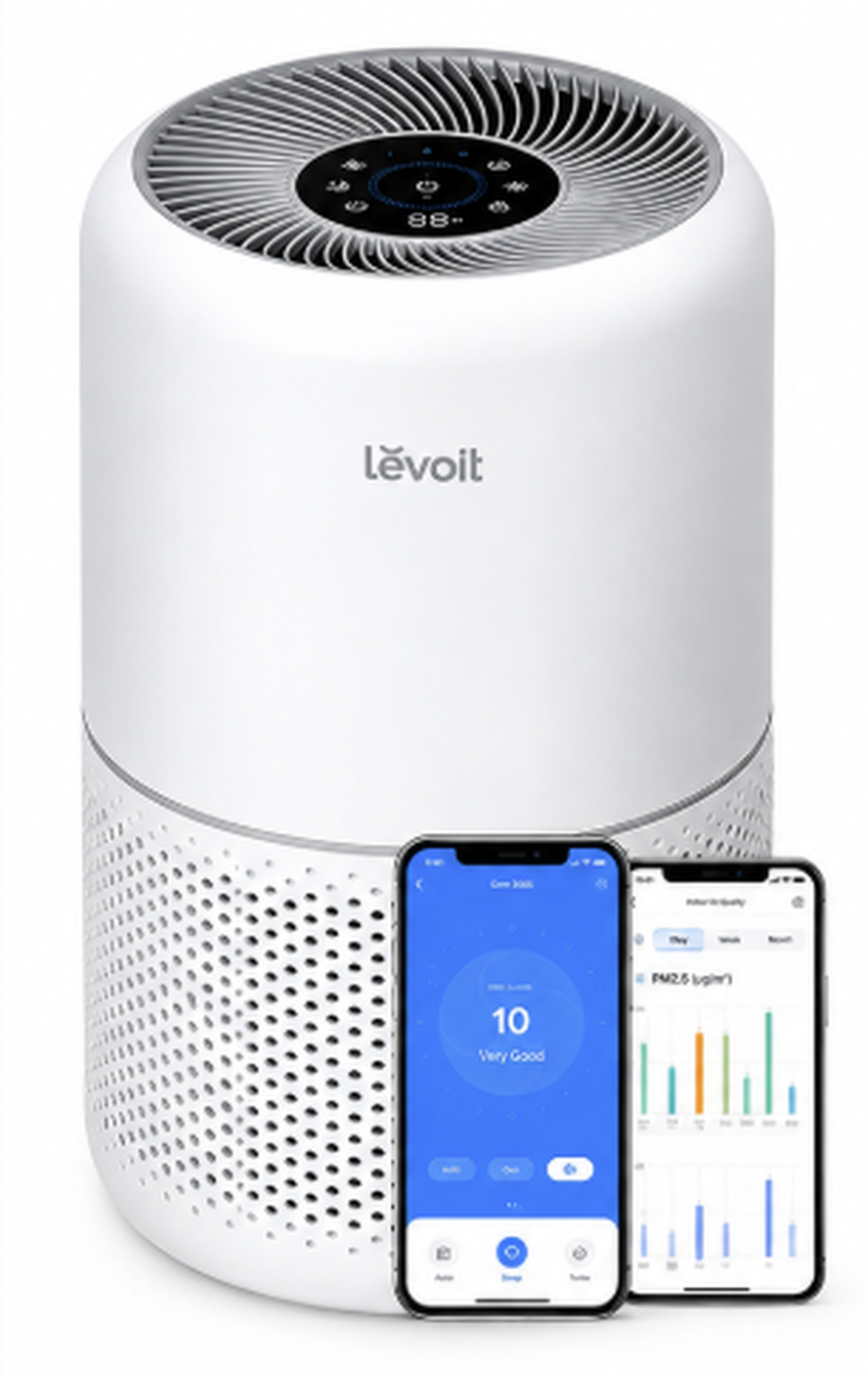
Levoit Core 300S
True HEPA H13 for ~£150 — best bang for your money
Philips Air Purifier 900 Series
Allergy UK certified, whisper-quiet at 17dB
TL;DR (UK, 2026): Yes — for allergy sufferers, pet owners, urban dwellers, and anyone waking up congested, a true HEPA H13 air purifier is worth it. Peer-reviewed research (Cochrane 2018 meta-analysis, EPA 2023 guide) shows 25–70% reductions in airborne allergens and PM2.5 in real homes. Expect £150–£250 upfront and £50–£110/year total running costs. Not worth it if your primary issue is damp/mould (buy a dehumidifier first) or if you bought a cheap 'HEPA-type' unit rather than certified H13.
You've seen the ads. You've read the claims. But before spending £100–£500 on an air purifier, you want to know: are air purifiers actually worth it in a UK home in 2026? Fair question — and the honest answer isn't the same for everyone.
If you're waking up congested, battling dust that never goes away, sleeping badly, or living with pets, allergies or near a busy road — the short answer is yes, it's one of the best £150–£250 you can spend on your health. The evidence is in do air purifiers actually work, and the impact on bedroom air quality and sleep is the most noticeable single change most people report. Here's the honest cost/benefit breakdown.
Our Top Picks
Key Factors to Consider
Signs an Air Purifier Is Worth It for You
Not everyone needs one. But if any of these apply, you'll almost certainly benefit:
• You sneeze, get congested, or feel stuffy indoors • Dust builds up within days of cleaning • You live near a busy road or in a city • You have pets and notice dander or smells • Someone in your home has asthma, hay fever, or eczema • You wake up with a blocked nose or dry throat • Your home has condensation, damp, or mould
If you ticked even one — a HEPA air purifier will make a noticeable difference. If you ticked three or more, it's a no-brainer.
The Evidence — What Peer-Reviewed Studies Show
The 'worth it' question comes down to measured outcomes. Here's what the strongest evidence says:
| Study | Population | Measured effect |
|---|---|---|
| Cochrane 2018 meta-analysis | Asthma + allergy patients | Significant reduction in allergy symptoms and medication use |
| EPA 2023 Guide to Air Cleaners | US residential homes | PM2.5 reduction of 30–70% with correctly sized HEPA |
| Allergy UK 2024 | UK allergy sufferers | Bedroom HEPA reduces morning symptoms in 65–80% of users within 2 weeks |
| University of Manchester (2021) | UK urban homes | 25–50% reduction in indoor PM2.5 with portable HEPA |
The key word is true HEPA. Cheap 'HEPA-type' filters let through 15–150x more pollutants and account for most 'didn't work' reviews. Always look for H13 certification. See our HEPA filters explained guide for the full breakdown.
The Real Cost vs Benefit — 3-Year Breakdown
The 'worth it' maths at 2026 UK prices:
| Line item | Year 1 | Year 2 | Year 3 |
|---|---|---|---|
| Purifier (one-off) | £120–£250 | £0 | £0 |
| Filter replacements | £40–£80 | £40–£80 | £40–£80 |
| Electricity (24/7 low) | £10–£30 | £10–£30 | £10–£30 |
| Total | £170–£360 | £50–£110 | £50–£110 |
Roughly £7–£14/month across 3 years — less than a Netflix subscription. For UK-specific per-model running costs see our air purifier running costs UK guide.
👤 Who Benefits Most vs Who Should Skip
You'll benefit most if:
• You or someone in your home has asthma, hay fever, dust-mite or pet allergies (biggest measurable win) • You live in a city or near a busy road (traffic PM2.5 infiltration is a real, measurable problem) • You have pets (dander persists for months after removal) • You wake up congested, dry-throated, or stuffy (see why you're waking up congested) • Dust returns within days of cleaning
You should skip a purifier if:
• Your problem is damp, condensation, or visible mould — a dehumidifier fixes the moisture source; a purifier only catches escaped spores. See purifier vs dehumidifier. • You live in a rural area with clean outdoor air, no pets, no allergies, and no dust problem (the benefit exists but is small) • Your budget forces you to a cheap 'HEPA-type' unit — better to wait and save for a proper H13 than buy a £39 unit that underdelivers
For targeted recommendations, see our best air purifier for allergies or best air purifier for pets guides.
What Most People Get Wrong About Whether They're Worth It
When buyers say a purifier 'wasn't worth it', it's almost always one of these mistakes — not the technology itself:
• Judging it by smell, not data: Purifiers remove invisible PM2.5 and allergens, not necessarily odours. A unit can be working brilliantly and still smell neutral. Use the app's air quality reading or a £25 PM2.5 monitor — that's where 'worth it' becomes obvious. • Buying once and forgetting filters: A clogged HEPA filter at month 9 performs like no filter at all. Budget £40–£80/year for replacements before deciding it 'stopped working'. • Expecting it to fix damp problems: If your real issue is condensation or rising damp, you need a dehumidifier first — a purifier captures spores but won't dry the room. See purifier vs dehumidifier. • Buying the cheapest 'HEPA-type' unit: The £39 Amazon special isn't true HEPA H13. It moves air around without filtering it properly — and that's where the 'waste of money' reviews come from. • Running it in the wrong room: A purifier in the empty hallway does nothing for the bedroom you're sleeping in. Place it where you spend time. For sleep specifically, see how to improve bedroom air quality.
Get these five right and the value calculation changes completely — most people who follow the setup checklist call it the best £150 they've spent that year.
How to Choose the Right One
Three things matter: true HEPA H13 filtration, correct room sizing, and low noise for bedrooms.
Don't just look at the purchase price — check replacement filter costs too. A 'cheap' purifier with expensive proprietary filters costs more over 3 years than a better unit with affordable replacements.
For our full, independently tested recommendations at every price point, see the best air purifiers UK guide.
Our Recommendations
Levoit Core 300S
Typical price: ~£150If you're on the fence, the Levoit Core 300S removes the risk. At ~£150 with true HEPA H13, smart app control, and whisper-quiet sleep mode — it's the easiest way to find out if an air purifier is worth it for your home.
- ✓ Genuine HEPA H13 at the lowest price point
- ✓ Smart app monitors real-time air quality
- ✓ 24dB sleep mode — quieter than a whisper
- ✗ 40m² coverage — one per room for larger homes
- ✗ Carbon filter is thin for heavy odour removal
⚠️Prices can change frequently on Amazon.
💡Air purifiers only work properly if filters are replaced regularly. See our Filter Club for guidance.
Comparison Table
| Product | Best For | Price | Rating | Coverage | |
|---|---|---|---|---|---|
| Levoit Core 300S | Best Value | Typical price: £149.99 | 4.8 | 24dB | 40m² |
| Philips Air Purifier 900 Series | Best for Allergies | Typical price: ~£180 | 4.7 | 17dB | 36m² |
Frequently Asked Questions
Conclusion
For allergy sufferers, pet owners, city dwellers, and anyone dealing with dust, poor sleep, or stuffy air — a quality HEPA air purifier is absolutely worth it. The costs are modest, the evidence is strong, and the benefits are noticeable within hours.
Start with the Levoit Core 300S if you want the best value, or the Philips Air Purifier 900 Series for certified allergy relief. For our full shortlist of tested UK air purifiers at every price point, explore the full guide.
Don't Forget Your Filters
Air purifiers only work if the filters are replaced regularly. Most people forget — and end up breathing dirty air.
Join the Filter Club