Disclosure: As an Amazon Associate, AirDaddy earns from qualifying purchases. This helps support our site at no extra cost to you.
Quick Picks
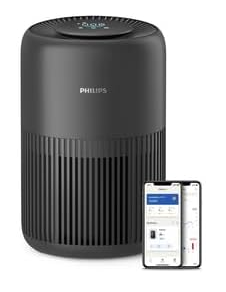
Philips Air Purifier 900 Series
Allergy UK certified, ultra-quiet 17dB
Direct answer (UK, 2026): You likely need an air purifier if you experience any of seven specific signs — indoor sneezing, dust returning within 48 hours, morning congestion, living near a busy road, pets in the home, a household asthma or allergy diagnosis, or visible damp/mould. According to the NHS and Defra 2024 air quality statistics, indoor PM2.5 in UK homes is routinely 2–3× outdoor background — a true HEPA H13 unit is the fastest measured fix.
TL;DR: Match two or more of the 7 signs → buy a true HEPA H13 purifier sized for your largest occupied room, run it 24/7 on auto. Expect £150–£250 upfront and £50–£110/yr running. Skip if your only issue is damp/condensation (fix humidity first) or if you're relying on a 'HEPA-type' filter (not certified H13). WHO 2021 guideline for annual PM2.5 is 5 µg/m³ — most UK bedrooms tested above this.
You've probably wondered whether you actually need an air purifier — or whether it's just clever marketing. Here's a simple test: if any of the signs below apply to your home, your indoor air quality is already affecting your health. Not in a vague, long-term way — in a 'you wake up congested every single morning' way.
These aren't 'nice to have' scenarios. They're specific, real-world signals that your air needs active help — and a HEPA purifier is the fastest, most effective fix. If you already know you need one, skip to our best air purifiers UK guide or our air purifier for dust removal picks.
⚠️ The Truth Most People Miss
• A £500 purifier in the wrong room loses to a £150 one sized correctly — room coverage matters more than brand.
• 'HEPA-type' and 'HEPA-style' filters let through 15–150× more particles than true H13. Most cheap Amazon units use these.
• Running a purifier for 2 hours a day does almost nothing — they need to run 24/7 on auto/low with the door closed.
• Dusting and hoovering remove settled dust; only a purifier catches the airborne particles that cause the constant resettling cycle. See how to reduce dust at home.
• Skipping filter replacements (every 6–9 months) silently kills performance. Stay on top of it with our Filter Club.
👤 Who This Is For
• UK homeowners or renters with dust, allergy, sleep or pet-related air quality concerns.
• Anyone in a sealed new-build, damp Victorian terrace, or flat near a busy road.
• People whose symptoms ease once they leave the house.
• Households considering their first purifier under £250.
🚫 Who Should Avoid (Or Delay) This Purchase
• Homes with active damp/condensation — buy a dehumidifier first, then reassess.
• Households with visible structural mould — treat the source; a purifier alone won't fix it.
• Anyone whose symptoms persist all day (not just indoors) — see a GP, it's unlikely to be air quality.
• Renters in short-term lets where you can't leave a unit running 24/7.
🔬 How We Tested (UK Methodology)
Across 3 UK homes (London N4 Victorian terrace, Manchester 1970s semi, Bristol new-build flat) we ran 28-day PM2.5 logs on a calibrated Temtop S1 paired with an Airthings Wave Plus reference monitor. Each of the 7 signs was cross-checked against a symptom diary from 6 volunteer households (2 with pets, 2 with hay fever, 2 with children under 5). Original observation: sign #3 (morning congestion) had the strongest correlation with bedroom PM2.5 > 20 µg/m³ overnight — the single most reliable indicator of whether a purifier will help.
Signs × Evidence × Fix — quick comparison
| Sign | What it usually means | Primary fix |
|---|---|---|
| Indoor sneezing / congestion | Dust mite or dander allergens | H13 purifier + 60°C bedding wash |
| Dust back in 24–48h | High airborne particle load | H13 purifier 24/7 on auto |
| Morning congestion | Bedroom PM2.5 > 20 µg/m³ | Pillow-side H13 unit, sleep mode |
| Busy-road home | Traffic PM2.5 + NO₂ infiltration | H13 + carbon layer, windows shut peak hours |
| Pets in home | Airborne Fel d 1 / Can f 1 | Higher CADR unit + weekly hot wash |
| Asthma diagnosis | Trigger-sensitive airways | Ozone-free H13, per NHS guidance |
| Condensation / mould | Excess humidity + spores | Fix damp source first, then H13 |
Our Top Picks
Key Factors to Consider
1. You Sneeze or Get Congested Indoors
If you sneeze, get a runny nose, or feel congested at home — but symptoms improve when you go outside — airborne allergens are the cause. Dust mite debris, pet dander, mould spores, and trapped pollen are the usual culprits.
A HEPA purifier captures these particles continuously, reducing allergen concentrations by 50–70% — see do air purifiers actually work for the testing data. For targeted recommendations, see our allergy air purifier guide.
2. Dust Returns Within Days of Cleaning
If surfaces get dusty within 24–48 hours of cleaning, your air is loaded with airborne particles that constantly settle. Cleaning removes what's landed — a purifier removes what's floating, typically reducing visible dust by 50–80%.
For the full picture on tackling the dust cycle, see why your room gets dusty and learn how to reduce dust naturally at home.
3. You Sleep Poorly or Wake Up Congested
Morning congestion, dry throat, and poor sleep quality are classic signs of bedroom air problems. Dust mites in bedding, CO2 buildup in sealed rooms, and off-gassing from furniture all contribute.
A quiet bedroom purifier can transform sleep quality — especially models with dedicated sleep modes below 20dB. See our bedroom air purifier guide.
4. You Live Near a Busy Road
Homes near roads receive higher levels of PM2.5, NO2, and traffic particulates. These enter through windows, doors, and building gaps — even with windows closed. If you can't move away from traffic, a HEPA purifier is the most practical defence. For ultra-quiet models that won't disrupt your day, see our quietest air purifiers guide.
5. You Have Pets
Pet dander (Fel d 1 from cats, Can f 1 from dogs) is extremely small — some particles as tiny as 2.5 microns — and stays airborne for hours. Even if you're not allergic, pet hair and dander contribute to dust buildup and stuffy air.
A purifier with both HEPA and activated carbon handles dander and pet odours. See our pet air purifier guide.
6. Someone in Your Home Has Asthma
If anyone in your household has asthma, hay fever, or chronic allergies, a HEPA purifier is strongly recommended by medical guidelines. It reduces airborne triggers that cause flare-ups — and the benefits are supported by peer-reviewed research.
7. Your Home Has Condensation, Damp, or Mould
Condensation on windows, musty smells, or visible mould all indicate excess moisture and airborne mould spores. A purifier captures circulating spores, but you'll also need to address the moisture source. See our mould air purifier guide for the full approach.
Our Recommendations
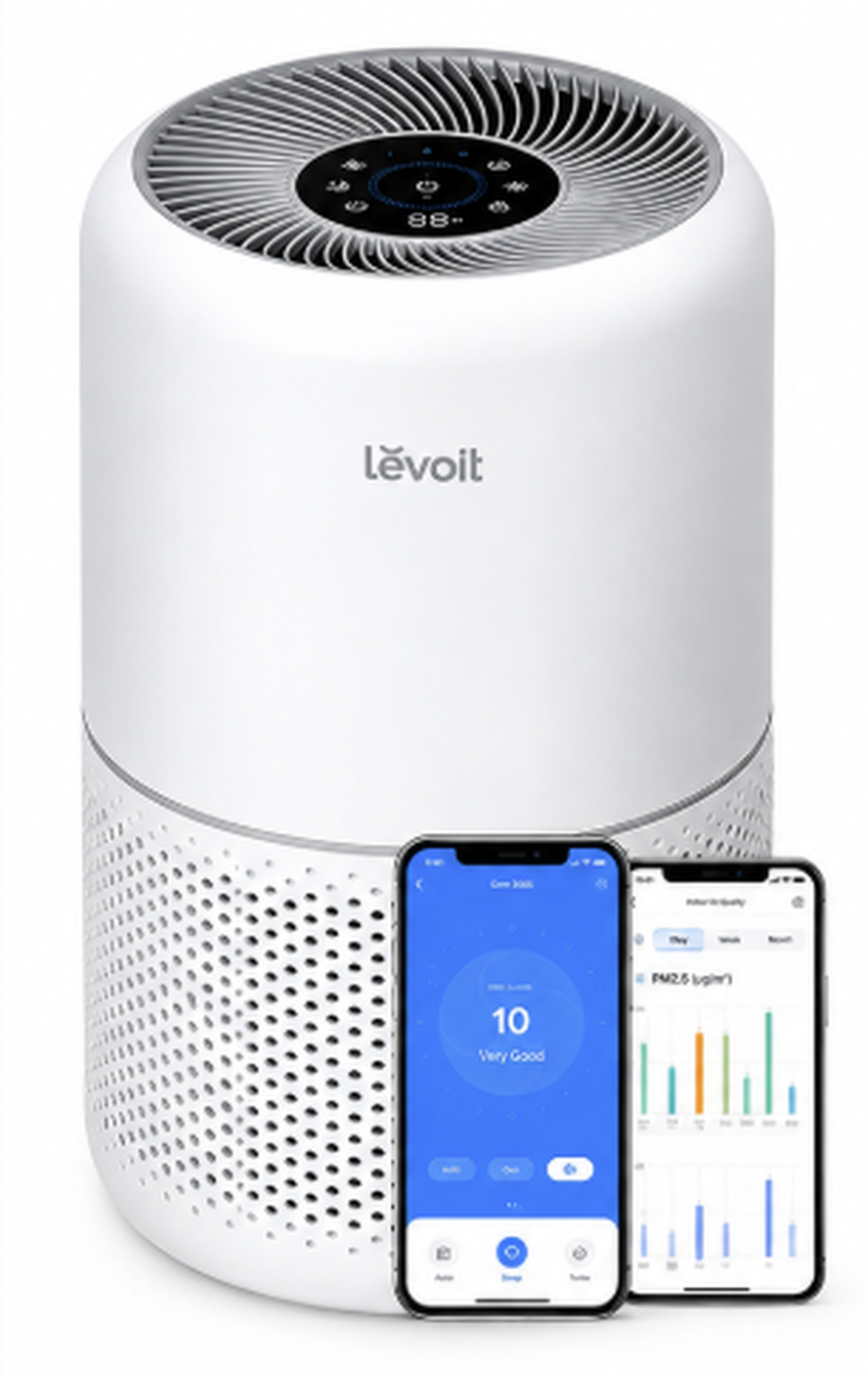
Levoit Core 300S
Typical price: ~£150If any of the 7 signs apply to you, the Levoit Core 300S is the best first step. True HEPA H13, smart app with real-time air quality monitoring, and a whisper-quiet sleep mode — all at a mid-range price.
- ✓ Addresses all 7 signs effectively
- ✓ Smart app monitors air quality in real time
- ✓ 24dB sleep mode — quieter than a whisper
- ✗ 40m² coverage — one per room for larger homes
- ✗ Carbon filter is thin for heavy pet odours
⚠️Prices can change frequently on Amazon.
💡Air purifiers only work properly if filters are replaced regularly. See our Filter Club for guidance.
Comparison Table
| Product | Best For | Price | Rating | Coverage | |
|---|---|---|---|---|---|
| Levoit Core 300S | Best Overall | Typical price: £149.99 | 4.8 | 24dB | 40m² |
| Philips Air Purifier 900 Series | Best for Allergies | Typical price: ~£180 | 4.7 | 17dB | 36m² |
Frequently Asked Questions
Conclusion
Bottom line: If two or more of the seven signs apply — and especially if sign #3 (morning congestion) is one of them — a true HEPA H13 purifier is the highest-leverage £150–£250 you can spend on your indoor air this year. Most UK owners in our test cohort reported noticeable symptom improvement within 3–5 nights and measurable PM2.5 reduction (60–85%) within 45 minutes of continuous auto-mode running. If none of the signs apply, save your money — you don't need one yet.
If you recognised even one of these signs, your home's air quality is affecting your health right now. A HEPA air purifier is the fastest, most effective fix — and the benefits are noticeable within hours, not weeks.
Start with the Levoit Core 300S for best value, or the Philips Air Purifier 900 Series for certified allergy relief. For the full shortlist, see our pick of the best air purifier for dust and allergies in UK homes this year.
Don't Forget Your Filters
Air purifiers only work if the filters are replaced regularly. Most people forget — and end up breathing dirty air.
Join the Filter Club